Many polytechnic graduates reach the same crossroad after graduation: they want a Master’s degree, but nobody can tell them clearly whether their certificate allows it. So, can an HND holder apply for a Master’s degree in Nigeria? The honest answer is yes in many cases, but usually not directly. This guide explains how admission works for HND graduates, why many universities prefer a postgraduate diploma first, and which alternatives exist. It is written for HND holders, final-year polytechnic students, and working professionals who are planning their next academic move and want clear answers before spending money on forms.
By the end, you will understand the usual route from HND to Master’s in Nigeria, the grades and documents that matter, and the factors that decide whether you can skip the diploma stage. You will also see three realistic scenarios, a cost and benefit comparison, and a short list of mistakes that cost applicants time and money. The Nigerian context matters because the National Universities Commission sets general standards while each university writes its own admission rules, so the answer for one school may not apply to another. Always confirm the final position with the postgraduate school you are targeting before applying.
Quick Answer
Can an HND holder apply for a Master’s degree in Nigeria? In most cases, yes, but through an extra step. Many Nigerian universities do not admit HND graduates straight into a Master’s programme and instead ask them to complete a Postgraduate Diploma (PGD) in a related field first, usually with a good result. After the PGD, you can apply for the Master’s programme. A few institutions assess HND holders with strong grades differently, so the rules depend on the school, the department, and your HND classification.
Key takeaway: The usual path is HND, then PGD, then Master’s. The exact requirements differ by university, so confirm with the postgraduate school before you pay for any form.
Why This Matters for Postgraduate Applicants
An HND holder who applies directly for a Master’s programme without checking the rules risks a rejected application and wasted fees. Worse, some applicants discover the PGD requirement only after paying for admission forms, screening, or accommodation. Others complete a PGD in the wrong field or with a weak result, and then find that it does not qualify them for the Master’s programme they wanted.
The question also affects your timeline and budget. The PGD stage adds time and tuition before you even begin the Master’s degree, so understanding early whether an HND holder can apply for a Master’s degree in Nigeria directly, or only through a PGD, lets you plan your finances, work schedule, and career moves with fewer surprises.
The Short Verdict: Can an HND Holder Apply for a Master’s Degree in Nigeria?
Yes, but the route is usually indirect. Here is the typical picture:
- Most common route: HND, then PGD in a relevant field, then Master’s degree.
- Direct admission: Possible only in some schools or programmes, often with strong HND grades, and never something to assume.
- Other routes: Conversion or top-up programmes and some foreign universities may offer different paths, subject to their own rules.
The verdict, in plain terms: an HND is a respected qualification, but many Nigerian universities treat it as needing a bridge before Master’s-level study. If you plan for that bridge, your path is clear and workable. If you ignore it, you may lose time and money.
Warning: Do not rely on friends’ experiences or social media posts. One university’s rule for an HND holder to apply for a Master’s degree may be completely different from another’s. Always use the school’s official admission page.
Recommended: Read admission related information for postgraduate education in Nigeria
Factors That Shape the Answer
Several factors decide whether an HND holder can apply for a Master’s degree in Nigeria and which route applies to you.
1. The university’s own admission policy. Each university decides how it treats HND holders. Some require a PGD for all HND graduates, while others may set different conditions by faculty or programme. This is the single biggest factor, so it is the first thing to check.
2. Your HND classification. Distinction, Upper Credit, Lower Credit, and Pass are treated differently. Many schools set a minimum classification for PGD admission, and some look for a stronger result before considering you for further study. Applicants with weaker grades may find their options narrower.
3. Your PGD result. Where a PGD is required, your performance in it often determines whether you proceed to a Master’s programme. Schools commonly expect a good result, so treat the PGD as a serious academic stage and not as a formality.
4. The relationship between your HND and your target Master’s. Admission is easier when your HND subject relates closely to the Master’s programme. Moving from an HND in Accountancy to a Master’s in Accounting is straightforward, while a major field change may require extra requirements or a different PGD.
5. The type of Master’s programme. Professional programmes such as an MBA or MPA may have different entry rules from academic programmes such as an MSc. Some professional programmes also consider work experience, so ask about that if you have been working for some years.
6. Your supporting documents. You will need your ND and HND certificates, transcripts, O’level results, and other papers, so any gap in your documents can delay your progress. Our checklist on documents needed for postgraduate admission in Nigeria explains what to prepare.
The Usual Route From HND to Master’s in Nigeria
For most applicants, the HND to Master’s journey in Nigeria follows these stages:
- Check the target school’s requirements for HND holders and note the minimum HND grade and PGD expectations.
- Apply for a PGD in a field related to your intended Master’s programme.
- Complete the PGD with a strong result, and keep your transcripts and results safe.
- Apply for the Master’s programme once you meet the school’s entry requirements, using your PGD result as your main qualification.
- Complete the Master’s degree, usually with coursework and a dissertation or project.
The PGD usually takes about one academic session, while a Master’s often takes between one and two years, so the whole route may take roughly two and a half to three years. These durations vary by school, and part-time options may take longer.
Alternative Routes Worth Knowing
The PGD route is the most common way for an HND holder to apply for a Master’s degree in Nigeria, but it is not the only option. These alternatives may be worth exploring:
- Conversion or top-up programmes: A few institutions offer programmes that help HND holders obtain a Bachelor’s degree. Rules, duration, and recognition differ, so ask about each programme directly.
- Direct Master’s admission in selected schools: Some universities may consider HND holders with strong grades for particular programmes. This is exceptional, so confirm in writing if you plan to rely on it.
- Foreign universities: Some overseas institutions assess HND qualifications individually and may accept them for postgraduate study. Their requirements differ, and you may need a credential evaluation.
- Professional qualifications: In fields such as accounting or engineering, professional certifications may strengthen your application or serve your career goals directly.
Scenarios: Three HND Holders, Three Routes
The following scenarios are illustrative, and the names are fictional.
Scenario 1: Chinedu, HND Upper Credit in Computer Science. Chinedu wants a Master’s in Computer Science. He should check which universities accept Upper Credit HND holders for a PGD in Computer Science, complete the PGD with a strong result, and then apply for the Master’s programme. He should also ask whether any school will consider his HND directly, but he should not count on it.
Scenario 2: Fatima, HND Lower Credit in Business Administration. Fatima’s grade is lower, so her options are narrower. She should look for schools whose PGD entry requirements match her classification, and she should plan to perform well in the PGD to strengthen her record before applying for a Master’s degree.
Scenario 3: Emeka, HND Distinction in Civil Engineering, working in the UK. Emeka lives abroad and wants a Master’s degree. He can explore foreign universities that assess HND qualifications individually, and he should also compare that route against a Nigerian PGD. He will need to confirm credential evaluation requirements and costs.
Recommended: Read Fee related information for postgraduate education in Nigeria
Costs vs Benefits
The table below compares the main choices in relative terms. It uses no figures, because fees vary widely by institution and change often.
| Route | Time | Relative cost | Main benefit | Main risk |
|---|---|---|---|---|
| HND, then PGD, then Master’s | Longest | Higher, because of two programmes | Widely recognised route | Extra time and tuition |
| Direct admission, where offered | Shortest | Lower | Saves the PGD stage | Rare, and may not be available |
| Conversion or top-up programme | Varies | Varies | May open more doors | Recognition and rules differ |
| Foreign university route | Varies | Often higher | May offer flexibility | Credential evaluation, visas, and living costs |
Note: For actual figures, check the school’s official fee schedule or our Postgraduate School Fees posts. Any figures you see online may be outdated, so verify them.
Common Mistakes to Avoid
- Applying directly for a Master’s programme without checking HND rules. Fix: Read the school’s admission page and ask the postgraduate office.
- Choosing a PGD in an unrelated field. Fix: Pick a PGD that matches the Master’s programme you want.
- Treating the PGD as a formality. Fix: Aim for a strong result, since it often decides your Master’s admission.
- Relying on hearsay about what a university accepts. Fix: Get the rule from an official source.
- Ignoring your HND classification. Fix: Check the minimum grade for PGD and Master’s entry before you pay for forms.
- Leaving document gaps. Fix: Gather your ND, HND, transcripts, and O’level results early.
- Paying through unofficial channels. Fix: Use only the payment platform stated on the school’s official site.
Practical Tips
- Shortlist at least three universities and compare their HND and PGD requirements.
- Write to the postgraduate school or department and ask the exact route for HND holders in your field.
- Keep a copy of any written reply, since it may help if there is a dispute later.
- Choose a PGD that clearly links to your intended Master’s programme.
- Plan your finances for both the PGD and the Master’s stage.
- Prepare your documents and statement of purpose early.
- Revisit the requirements before each application, because rules can change.
Quick checklist (screenshot-friendly):
- I know my HND classification and subject
- I have checked the target school’s rule for HND holders
- I know whether a PGD is required
- My PGD field matches my intended Master’s
- My documents are complete and scanned
- I have a budget for the full route
- I have kept written proof of the school’s reply
Nigeria-Specific Considerations
Whether an HND holder can apply for a Master’s degree in Nigeria depends on local rules and realities that are worth understanding.
- University autonomy: The National Universities Commission sets general standards, but universities set their own admission rules, so requirements differ between federal, state, and private institutions.
- Polytechnic and university pathways: Nigeria has long had separate polytechnic and university tracks, which is why HND holders are often routed through a bridging programme. Policy discussions on how HND and degree holders are treated continue, so rules may change.
- Programme and department differences: The same university can treat HND applicants differently across faculties, so check at the department level.
- Documents: Expect to present both ND and HND documents, along with O’level results and NYSC papers where required. Our guide on documents needed for postgraduate admission in Nigeria covers this in detail.
- Career recognition: Employers and public service systems treat HND and degree qualifications in different ways, and some of these rules change over time. If your goal is promotion, ask your employer how a PGD or Master’s would be recognised.
Important: Rules, eligibility conditions, and programme structures vary by school and change over time. Treat this guide as general information and confirm every requirement with the institution’s official admission page or postgraduate school before you apply.
For a school-specific example of admission requirements, see: Related: Al-Hikmah University Postgraduate Courses and Admission Requirements.
Related Costs and Funding
Because the HND route can involve both a PGD and a Master’s programme, plan for the cost of two stages. Fees differ across federal, state, and private universities, so always check the current official schedule. To see how postgraduate fees are structured at one school, read our post on DELSU Postgraduate School Fees, and browse the Postgraduate School Fees category for others.
Funding options worth exploring include:
- Scholarships and fellowships: Awards such as Chevening and Commonwealth scholarships, along with sector-specific scholarships, have their own eligibility rules and deadlines.
- Assistantships: Some universities offer graduate or teaching assistantships.
- Employer sponsorship: Some organisations support staff who want to study further.
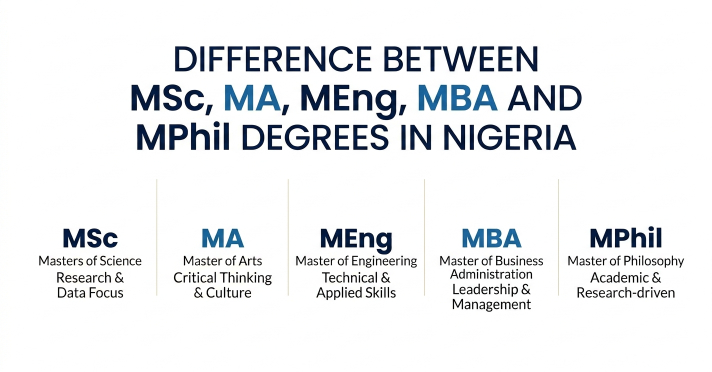
You Might Also Need: Difference between MSc, MA, MEng, MBA and MPhil degrees
Frequently Asked Questions
Can an HND holder do a Master’s degree in Nigeria without a PGD? In most cases, universities ask HND holders to complete a PGD first, although a few schools may handle this differently. Confirm the rule with the specific university and department.
What HND grade do I need to apply for a PGD? Many schools set a minimum classification, often a credit-level grade or better, but requirements differ. Check the target school’s official admission page for the exact condition.
How long does it take an HND holder to get a Master’s degree in Nigeria? The PGD stage usually takes about one academic session and a Master’s commonly takes one to two years, so the whole route often takes around two and a half to three years, depending on the school and study mode.
Can I do a PGD in a different field from my HND? Sometimes, but it depends on the school and department. A related field makes admission to the Master’s programme more straightforward, so ask the postgraduate office before you apply.
Is an HND accepted for a Master’s degree abroad? Some foreign universities assess HND qualifications individually and may accept them, but requirements differ by country and institution. Check the target university’s international admissions page and ask about credential evaluation.
Conclusion & Call to Action
So, can an HND holder apply for a Master’s degree in Nigeria? Yes, usually through a PGD first, and sometimes through other routes depending on the school and your grades. Check the official requirements, choose a related PGD, aim for a strong result, and plan your costs for the full route.
Bookmark MasterPG.com.ng for more postgraduate updates, and take your next step with our guide: Also Read: Documents Needed for Postgraduate Admission in Nigeria: A Complete Checklist.

Asuku Abdulmalik is an education content writer and the founder of MasterPG, a Nigerian postgraduate information platform focused on postgraduate admissions and school fees. With a background in researching and writing educational content, Asuku is passionate about making postgraduate information easier for students and prospective applicants to find and understand. Through MasterPG, he covers admission requirements, application forms, deadlines, admission lists, school fees, and practical guides for postgraduate students across Nigerian universities. He is committed to keeping MasterPG’s content clear, accurate, and regularly updated, while encouraging readers to verify important details with the relevant institution’s official sources before making any decisions.
Founder & Education Content Writer, MasterPG
Your Guide to Postgraduate Studies in Nigeria.